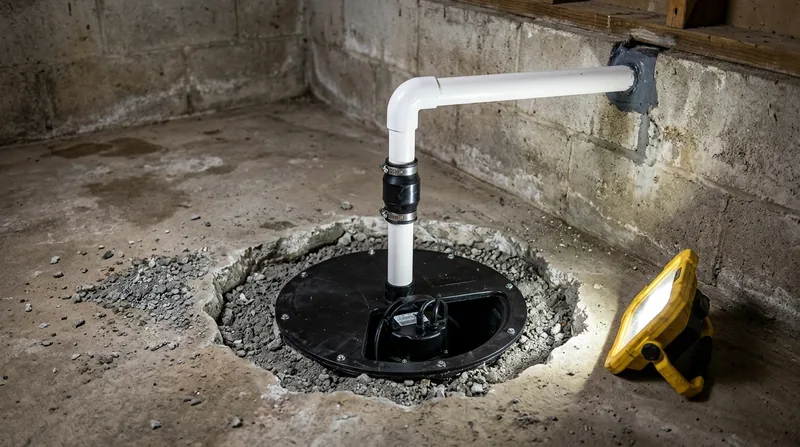




Akron sits on the Allegheny Plateau edge, where heavy glacial till clay over shale meets the Cuyahoga River valley, Little Cuyahoga and Tinkers Creek. That geology sends hillside runoff and a high water table straight at the full basements under Highland Square foursquares, West Hill Tudors and the Goodyear Heights and Firestone Park company houses built in the 1910s and 1920s. When spring snowmelt and heavy summer storms stack up, the sump pump is the one machine standing between a dry floor and a wet basement. Sump Pump Installation & Replacement in Akron is the work we do most, from stone-wall cellars in Kenmore to poured-concrete basements in Green and Hudson. A pump that is undersized, sitting in a dirt pit, or dumping discharge two feet from the foundation will quit when you need it most. We size, set and route the system so it keeps up with the water this city actually throws at it. Start with a free basement inspection and we will tell you plainly what your pit and discharge line are doing wrong.
Why Sump Pump Installation & Replacement Matters in Akron's Clay and Hillside Neighborhoods
The failure mode that dominates here is hydrostatic pressure from saturated glacial clay after a hard freeze-thaw cycle. Water backs up under the footing, finds the path of least resistance, and pools at the sump basin faster than a tired pump can move it. In the lowlands near the Portage Lakes and along Tinkers Creek, the water table stays high for weeks after the ground thaws, so the pump cycles constantly and the motor burns out. We see this every March in Ellet ranches and Fairlawn split-levels with finished basements.
- An undersized pump cannot keep up with spring snowmelt, and the basin overflows onto the floor.
- A dirt or unsealed basin lets clay silt in, which clogs the intake and shortens pump life.
- A missing or failed check valve sends water back into the pit on every cycle.
- Discharge lines that dump next to the foundation recycle the same water back into the footing drain.
- A pump with no battery backup quits during the summer storm outages that knock out power across the city.
Each of these problems is cheap to fix when caught early and expensive to fix after a finished basement takes on water.
Key info: In a 1920s Firestone Park house with a stone foundation, we routinely find a sump pit cut into the old clay floor with no liner and a 1/3 HP pump from a previous owner. Upgrading to a sealed basin and a correctly sized pump stops the silt clogging and the short cycling that wear those systems out.
Ohio does not license home improvement contractors statewide, so local building departments handle permits and inspections. Check the City of Akron's building department requirements before any work that alters drainage or the sanitary connection of a sump discharge: akronohio.gov.
How We Install and Replace a Sump Pump in an Akron Basement
We start by watching how water actually enters the basement, not by guessing. On a hillside lot in North Hill or a low lot near the Cuyahoga River valley, the fix may be a larger basin and a higher-volume pump. On a 1990s Colonial in Stow with a poured wall and an existing interior perimeter drain, the job is usually a clean replacement and a discharge correction. We measure the inflow during a storm cycle, check the pit, the check valve and the discharge route, then quote the work in plain terms.
- We inspect the basin, the incoming drain tile and the discharge line, and we test the existing pump under load.
- We cut and set a new sealed sump basin sized to the inflow, bedded in gravel so it does not heave in clay soil.
- We install a correctly sized submersible pump, a check valve and a sealed lid that keeps debris and humidity out of the pit.
- We run a rigid discharge line to daylight or to a storm connection, with a freeze-protected slope and a discharge point well away from the foundation.
- We wire the pump to a dedicated GFCI circuit and test the float through several full cycles before we leave.
If the pit is filling from a failed footing drain rather than from the soil, a pump alone will not solve it, and we will tell you so. That is when an interior drain tile system is the better answer, and we will explain why before you spend a dollar on a bigger pump.
Key info: A Cuyahoga Falls split-level we serviced had a 1/2 HP pump discharging through a buried corrugated line that had crushed under a patio slab. The pump ran constantly and the basement still seeped. We replaced the line with rigid PVC to a proper daylight outlet and the cycling stopped the same day.
Sump Pump Approaches We Use in Akron Homes
Not every basement needs the same system. The right choice depends on your wall type, the water volume you see, and whether the pit is fed by a working drain tile or by direct soil seepage. Here is how the main approaches compare in Akron conditions.
| Approach | Description | Best for |
|---|---|---|
| Standard submersible replacement | New correctly sized pump and check valve set in the existing basin | A sound basin with a burned-out or undersized pump |
| New sealed basin and pump | Lined, gravel-bedded basin with a sealed lid and full pump package | Dirt pits, silt clogging and older stone-foundation basements |
| High-volume system | Larger basin and higher-capacity pump for heavy inflow | Low lots near the Portage Lakes and hillside runoff properties |
| Discharge line correction | Rigid line to daylight or storm connection with freeze protection | Pumps that recycle water back to the foundation |
| Battery backup addition | Backup pump and battery on the same basin | Storm-season power outages and finished basements |
Sump Pump Installation & Replacement Cost in Akron: What to Expect
Most straightforward sump pump replacements in Akron start around $1,200, which covers a correctly sized submersible pump, a check valve, a sealed lid and a tested discharge route. From there the price moves with the work the pit and the line actually need. A new sealed basin cut into an old clay floor costs more than a drop-in replacement. A high-volume system for a low lot near the Portage Lakes costs more than a standard unit in a Stow Colonial. A long discharge run to daylight, or a line that has to be rerouted around a patio or driveway, adds labor and materials.
Finished basements add a different cost factor: floor protection, moving stored items and careful cutting. We give you a written scope before we start, and we do not sell a high-volume system where a standard pump will do. Get two or three estimates and compare the scope line by line, not just the bottom number. A quote that leaves out the check valve or the discharge correction is not cheaper, it is just incomplete. Our pricing overview lays out how the numbers break down.
What to Look For When Hiring a Sump Pump Contractor Near Akron
Ask for proof of Ohio licensing where it applies and a certificate of insurance before anyone touches your basement. Confirm the contractor carries general liability and workers' compensation, and ask for references from jobs in your part of the city, not just from a brochure. Get the scope in writing, including pump model, basin type, check valve and where the discharge will terminate.
Ask who pulls the permit if the work alters drainage or the sanitary connection of the sump discharge, because rules vary by jurisdiction and the local building department has the final word. If you live in a community with HOA rules, such as parts of Hudson or Green, confirm any exterior discharge or grading change before work begins. A contractor who hesitates on any of these questions is telling you something. Contact us and we will walk you through the scope and the paperwork before you commit.
Sump Pump Installation & Replacement in Akron: Pricing Guide
| Service | Price | Details |
|---|---|---|
| Standard submersible pump replacement | Starting at $1,200 | New correctly sized pump, check valve and sealed lid in a sound existing basin, tested under load |
| New sealed basin and pump package | Starting at $1,850 | Gravel-bedded lined basin cut into the floor, sealed lid, pump and check valve included |
| High-volume system for heavy inflow | Starting at $2,400 | Larger basin and higher-capacity pump for low lots and hillside runoff properties |
| Discharge line correction | Starting at $650 | Rigid line to daylight or storm connection with freeze-protected slope, priced by run length |
| Battery backup addition | Starting at $850 | Backup pump, battery and charger on the same basin, sized to the primary pump |
| Complex or large-scale job | On estimate | Finished basements, long discharge runs and pit rebuilds need an on-site look before a number |
Indicative pricing, the exact cost depends on square footage, finish, and site access. Free personalized estimate within 24h at (330) 315-1186.


